As you may have noticed, some of my fellow bloggers are posting their English assignments. This came about after we finished reading the modernist novel Wide Sargasso Sea by Jean Rhys, which was basically a response to Jane Eyre. Rhys wrote a realistic, sympathetic life for a character in Jane Eyre who isn't very well explained (she was basically a one-dimensional insane villain/obstacle). So, the assignment went something like this: choosing a book your teacher has read, pick a character that was ill-defined or unexplained in the original text, and write a story for them as a sympathetic character using modernist techniques.
I chose to write back to Dracula by Bram Stoker, and I specifically chose Count Dracula as the character who I would be rewriting. Since Blogger does weird things to the formatting if I paste the story in, I'll just give you a link to a public Google doc. Side note: parts of this may not make sense if you haven't read the original.
Saturday, November 17, 2012

Sunday, October 7, 2012
Investment Eating
My takes on how we could combine the fast-food and banking industries, since those are two things that obviously need to be combined:
#1: Investment Eating: you walk into the restaurant, and after perusing the menu you buy, for example, 1 share of a cow expected to mature in three years. Then, when that investment matures, dividends are paid in beef (specifically, in the form of a hamburger). If you bought a share of a potato crop, you'd have fries with that.
#2: Fast-Banking: you walk into a fast-food type place and select your investment portfolio from a bunch of pre-arranged combos on a menu. You then hand your money over to the bored-looking cashier, and they give you a receipt with a code that'll let you track your investments online.
Personally, I think #2 would serve to make the whole process much faster...just saying.
Thursday, October 4, 2012
The Campaign
On some blogs, the authors would take some time to make their political views known as the campaign heats up. However, I'll settle for this, since I think it's about as productive as the actual campaign so far:
(In case you were wondering, Obama mentioned Trump in a rebuttal to Romney, claiming that Romney would consider Trump a small business.)
I think I should, in all fairness, give Romney's battle for the Republican nomination a mention here as well:
What can I say? I'm bipartisan.
I think I should, in all fairness, give Romney's battle for the Republican nomination a mention here as well:
Sunday, September 30, 2012
Schrodinger's Fridge
Schrodinger's fridge: both full and empty until opened, it is the bane of any college student (or any hungry person in general).
Thursday, September 20, 2012
Quotes #1
"A mind without purpose will walk in dark places." - Ravenor.
Just think about it: as a Christian, Christ shows you your purpose. Where would you be without Him?
Monday, September 17, 2012
A Choose-Your-Own College Letter
In case you wanted to save the time you spend reading college letters for doing something else, I've compiled a modular college letter. Every time you want the experience of getting college mail, just choose a different set of adjectives, since all those letters really say the same thing anyways.
(University Seal.)
Hello! We're (insert name here) College/University, and we're here to say what a great/motivated/gifted/academically talented/special student you are! Here at (insert name here), you'll find an academic environment that is engaging/challenging/innovative/smart, taught by world-class professionals/experts in their fields/visionary professors who will work with you to provide the best college experience possible.
(Picture of person or people looking intently at test tube. Picture of athlete generally looking intense. Picture of dude with a scarf reading in a tree. Picture of that beautiful campus with a freshly mowed lawn.)
Our degrees will prepare you for a career/real life/the workforce/the real world by giving you a hands-on/cutting-edge/immersive education with practical lab experience/internships/OUR CO-OP PROGRAM (looking at you, Drexel).
(Picture of graduation and graduates. Picture of crowd of students walking somewhere. Picture of guy in business clothes who looks like he's got a job. Another picture of the beautiful campus.)
Our student body is diverse/immersive/awesome/vibrant/accommodating/feels like family with sports, clubs, organizations, and more for you to explore/immerse yourself in/discover.
(Picture of study group talking. Picture of attractive students intently discussing something. Picture of student event or school rally.)
In conclusion, we think you are awesome and that you would be a good fit here. We're the right school/university/home for you. Sincerely, (insert name here).
Sunday, September 16, 2012
Airsoft and Stuff
For anyone wondering why I wasn't at church today, and why I haven't posted in a few days, I have an answer:

Broadly speaking, I was playing airsoft here. More specifically, I was sleeping off the effects of a 9-hour ride back from there, since it's actually fairly close to North Carolina. Despite the distance, it was a truly awesome time.
However, during the nighttime rides there and back, I did a lot of looking out the window. It really is interesting how the nighttime changes a landscape. Forests and fields fade into shadows, and honestly it feels like the road is the only really solid thing, since everything else is a black outline. It's really quite interesting.
And now, since I'm still tired and I have a sneaking suspicion that last paragraph is rambling, I'm going to get some sleep. Get ready for the schoolweek!
Thursday, September 13, 2012
Seeing the Future
You know how people sometimes say they wish they could see the future? Well, this is a short story I wrote a while back on the topic. Basically, my point was that seeing the future would be less of a blessing than you might think, especially if you were to see your entire future. It turned out a little morbid, but I think that reinforces the point. I will admit I was inspired by the Dune series by Frank Herbert, as it deals with much the same theme.
I saw it coming.
I've known this was going to happen but the fact is that I can't change any of it. I am going to die today.
When I was younger, I asked to see the future. Now some people think of the future as fluid and ever-changing, while others think of it as fixed. I don't know which of these ideas is true, but I do know that my view is fixed. I can see the effects of anything I do today on tomorrow and the next day and the next. But even though I can see, I can't change anything. That's why I'm going to die today.
I've made some enemies, but I think them powerless. I remembered that exact thought, right now, yesterday. The part where I stare into the trees and realize something isn't right. I know he'll step out right...there. Even as my assassin steps out, I know he'll pull a gun from its holster on his back. Yesterday I knew the shock of this moment, and I knew this paradox of surprise at what, for me, is effectively a memory.
This is my curse. Did I do anything to protect myself? No. Did I bring any guards? No. This is my future and I cannot escape it. Maybe it's still fluid and ever-changing like he said, but this is the result of all those variables of life, if they exist at all.
The assassin aims. I remember. He cocks his weapon and now I feel a strange sense of relief, just like I knew I would. I'm here. There's nothing I can do. My folly has caught up with me.
He fires. I drop to the ground and my last thought, my hope since I first saw the end, is: now, something new.
Knowing It
I've known this was going to happen but the fact is that I can't change any of it. I am going to die today.
When I was younger, I asked to see the future. Now some people think of the future as fluid and ever-changing, while others think of it as fixed. I don't know which of these ideas is true, but I do know that my view is fixed. I can see the effects of anything I do today on tomorrow and the next day and the next. But even though I can see, I can't change anything. That's why I'm going to die today.
I've made some enemies, but I think them powerless. I remembered that exact thought, right now, yesterday. The part where I stare into the trees and realize something isn't right. I know he'll step out right...there. Even as my assassin steps out, I know he'll pull a gun from its holster on his back. Yesterday I knew the shock of this moment, and I knew this paradox of surprise at what, for me, is effectively a memory.
This is my curse. Did I do anything to protect myself? No. Did I bring any guards? No. This is my future and I cannot escape it. Maybe it's still fluid and ever-changing like he said, but this is the result of all those variables of life, if they exist at all.
The assassin aims. I remember. He cocks his weapon and now I feel a strange sense of relief, just like I knew I would. I'm here. There's nothing I can do. My folly has caught up with me.
He fires. I drop to the ground and my last thought, my hope since I first saw the end, is: now, something new.
Tuesday, September 11, 2012
An Equation of Life
When you think about it, life is an equation with infinite numbers of variables.
Monday, September 10, 2012
The Future
The future is a fixed reality. It is only our viewpoint that makes the events seem uncertain and fluid. As soon as our viewpoint changes, from anticipation of a shifting future to memory of a solid past, that we see these events as they are: chosen by God.
In other news, I've broken a finger and gotten a cold. Expect shorter posts and more typos.
In other news, I've broken a finger and gotten a cold. Expect shorter posts and more typos.
Sunday, September 9, 2012
Reality...
Is our view of reality (by reality I mean what really exists, not the filter of our perception of it) like two parallel lines in a three-dimensional plane? That is, do they seem like the same thing from one perspective, while in reality being totally different and separate?
Saturday, September 8, 2012
Jonah...
Last night, my family and I went to see the production of Jonah at the Sight and Sound Theatre in Lancaster. It was basically a staged production of the story of Jonah. Now, I will admit that I thought the idea seemed fishy. We parked under the shade of a plant that had withered by the time we got out, and we had to wait forty minutes to find a seat, but once the show started the experience was truly immersive. From the washed-up actors to the dance numbers, it was just hard to stomach. The seats were high enough to be above sea level, and we got the tickets at such a huge discount we felt like we had to repent. We really had a whale of a time.
Thursday, September 6, 2012
And We're Back...
...to school. I have found no clearer evidence of this than the way that my formerly pristine desk looked this morning:

And, despite my best intentions, it looked much the same 12 hours later:


Well, I suppose a messy desk is the sign of a busy mind. Or at least a mind that is current alternating between feeling overworked and praying to God that this week was only so hard because I'm just getting back from break...
Wednesday, September 5, 2012
Belief
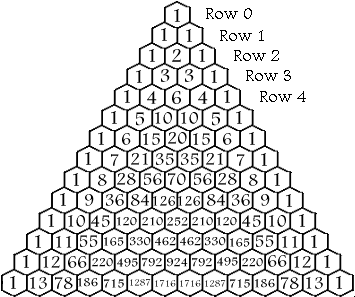
In my discussions with non-Christians, I've sometimes heard an argument that goes like this: "Well, I think you're wrong, and I don't think you can prove you're right, so how about we wait until we both die and then we'll see who's right?" Probably the best response I've heard to this is in something that Blaise Pascal once said (yep, the same guy who came up with Pascal's Triangle):
"Belief is a wise wager. Granted that faith cannot be proved, what harm will come to you if you gamble on its truth and it proves false? If you gain, you gain all; if you lose, you lose nothing. Wager, then, without hesitation, that He exists."
"Belief is a wise wager. Granted that faith cannot be proved, what harm will come to you if you gamble on its truth and it proves false? If you gain, you gain all; if you lose, you lose nothing. Wager, then, without hesitation, that He exists."
Tuesday, September 4, 2012
Coincidences
This idea of coincidence seems to be engrained in our popular culture. The idea that random, purposeless chance occurrences can just happen to us seems normal. But here's the interesting part: nothing can be truly random or purposeless, because nothing is outside of God's control, and God has a plan for His universe. Just think about that. Everything you've ever classified as "a random coincidence" was ordained by God to happen to you for a purpose. Doesn't that show how awesome God is?
Inspiration
The thing with inspiration is that, by definition, it doesn't come when you want it. It always seems to be triggered by something outside of us - a conversation, an event, an image. While this can lead to finding profound meanings in the mundane things of life, it can also lead to challenges when in a daily writing competition...
Monday, September 3, 2012
I Believe This Is Ironic....

It certainly leads to some interesting conversations (read: me debating the textbook) in my head while I'm reading psychology.
Sunday, September 2, 2012
College...
So, this year I'm taking college classes (while still a HS senior) at PSU Brandywine. It's an interesting introduction to college (if you can even call it that, since I'm not living there or taking tons of classes), and one thing has already struck me:
How easy it is to be anonymous.
I suppose I need to set the stage. I (and most of you) grew up attending Compass, the homeschool co-op at my church. We got to know everyone in our small (by college standards) classes, and as we advanced in grades and people shuffled around we got to know the ones who stuck around even better. Everyone knew your name, and you knew everyone. And that's how it was until 8th grade (although I showed up later on too).
Then I found my way to Scholars, where a similar process occurred. Over class discussions in American Lit class and group projects and "working on stuff" and studying in the library, we, the freshmen of ninth grade (was that really three years ago?!?), soon all got to know each other very well. As we moved up through the grades and classes we maintained a level of connectedness and friendship that, I think, is unique. We've hung out together, worked together, and stressed out over school together. And through all that, we've gotten to know one another very well. It really feels like a community.
And, after all that closeness, I found myself sitting in a room at PSU last Tuesday waiting for my Psychology lecture to start. The desks were in a 6 x 7 grid, and they were packed. And as I sat off to one side of the center of the desk grid, I realized: none of these people know anything about me, and I know nothing about them. I don't even know their names. We have no shared memories of growing up together, of laughing together, of worshiping together, of making music videos about British literature together, of spending long hours collaborating on projects together or hanging out together. I am anonymous to them, and they are anonymous to me. If I vanished tomorrow (or if one of them did), the rest of us probably wouldn't even notice.
Unlike in Compass or Scholars, this is our only shared class together. Like bugs to a flashing light, we students of Psychology 100 flock to this room for an hour, and then we disperse just as swiftly. There isn't even an opportunity to change this situation, to get to know these people better. We're here briefly, and then we're gone quickly (sounds like a reflection on this earthly existence, but I'll save that for later).
Perhaps college seem different when I'm really enrolled as an undergrad, but for now this class seems like a microcosm of life after high school: it's a blank slate. To those around you in college, you're defined by who you are and what you do from that first day of classes onwards, not by shared memories of growing up together or being in high school together. You can be, in a very real sense, a new person. It's chilling; it's exciting. It is what you make of it.
Saturday, September 1, 2012
Fine, Stevie...
Well, it's that time of year again. School is starting, work is going, life is getting busy...and some of us decide to try to post once a day for a month. I speak, of course, of the Blog Challenge, hosted by my good friend Stevie (that's his blog in that link). The premise is simple: post at least once a day for a month. The content of the post doesn't matter; it just has to be a post.
So, what can you expect from me? Honestly, I don't know! It's been about a year since I regularly posted on this blog, mainly because I forget. You can probably expect reflection, satire, quotes, humor, and anything else that finds its way into the badly organized library that is my mind. Like I said, it's been a while since I've posted here, and since my pageviews keep increasing, it would appear somebody is still checking. Best not to disappoint them, eh?
So, I think I shall leave you with this:
"Technically, the city of Ankh-Morpork is a Tyranny, which is not always the same thing as a monarchy, and in fact even the post of Tyrant has been somewhat redefined by the incumbent, Lord Vetinari, as the only form of democracy that works. Everyone is entitled to vote, unless disqualified by reason of age or not being Lord Vetinari."
For more info on Lord Vetinari, go here.
.
.
.
.
.
.
.
.
You really should not be surprised I just sent you to the biography of a fictional ruler. Although, according to some schools of thought, that makes him no less real....
Thursday, March 8, 2012
prayer
If we try to do any part of the Christian life on our own, we fail. Prayer is simply God's way of giving Christians another option, one that doesn't rely on us and our limited power and strength but instead relies on Him who is all-powerful and completely wise.
(inspired by A Praying Life by Paul Miller. It's an excellent book; if you haven't read it already, you should.)
(inspired by A Praying Life by Paul Miller. It's an excellent book; if you haven't read it already, you should.)
Thursday, March 1, 2012
thoughts
Thought for the day: In Christ, I see both my supreme inability to do anything and the Lord's supreme ability to do everything.
(from A Praying Life by Paul Miller)
(from A Praying Life by Paul Miller)
Wednesday, February 22, 2012
writer's....forgetfulness?
Well, I know I haven't been posting nearly as much as I used to, and I believe this is part of the reason why: I suffer from writer's forgetfulness.
Where writer's block is an inability to find inspiration to write about, writer's forgetfulness is simply an inability to remember those random thoughts of genius that provide inspiration. You think it, you say "I've got to remember this!!", then you fail to write it down and you completely forget the thought. You don't forget about the thought, just the contents of the thought itself. That is probably the most irritating part. It's like having a blank inside your head. Like the reverse of Inception, where you're missing an idea instead of gaining it.
So..yeah. I'm planning to start writing these things down more, as I'm pretty sure I have some good ideas...
Wednesday, February 15, 2012

Monday, February 13, 2012
grace
In 1 Tim. 1:15, Paul says "The saying is trustworthy and deserving of full acceptance, that Christ Jesus came into the world to save sinners, of whom I am the foremost." There have been times when I've looked at myself and thought, "no, Paul, I am the worst sinner I know."
But that's why God's grace is so important. Because of it, we are offered salvation (see Rom. 3:24). And that is what saves us from our sins, no matter how bad they look to us at the time.
Grace is what keeps us as Christians from forever being cursed as the worst sinners we know.
Isn't that amazing?
Saturday, February 11, 2012
Valentine's Day gifts
For you Portal players out there, you probably already recognize this. If you don't play Portal...I really feel deeply sorry for you. Please, look it up and then play it. Or at least just watch some videos. Or something. I can promise you, there will be cake (and you'll start understanding all these Portal references I keep making).
Speaking of cake, it is a perfectly valid Valentine's Day gift. And with Valentine's Day coming up, people really need a guide to buying gifts that are suitably non-lethal. Below, those helpful people at Aperture Laboratories have just the thing. They outline several Valentine's Day gifts that you should not buy for anybody, ever. Like chocolate. Or giant diamonds. Really, avoid those.
(full-screen it if you can't read the text bubbles, since they basically provide the explanations).
Evolution
My friend Isaac @Growing In God posted this video a week or two ago. While it is somewhat fast-paced, I think it raises a lot of excellent questions about evolution. I'm not even going to try and restate them, so instead I'm just going to tell you to watch the video. It's worth it.
Tuesday, February 7, 2012
asking God in prayer
Prayer. It's a fairly simple act, but as a Christian, I think that it is also one of the easiest things about Christianity to misinterpret. What is it exactly? Is it just sorta saying whatever problems are on our minds at the moment, hoping that somehow, someway, God will hear us? Is it a ritualistic chant in Latin that is somehow holy, despite the fact that only the priest speaking it actually understands it?
Simply put, prayer is "personal communication with God" (Grudem 376). The primary objective of this communication should always to be praise and glorify God in our prayers, and there should always be thankfulness for the blessings He's given us present in whatever our prayers are. However, prayer can include requests to God as well, and it is those that I want to focus on for this post.
In John 14: 13-14, Jesus says "Whatever you ask in my name, this I will do, that the Father may be glorified in the Son. If you ask me anything in my name, I will do it." At first glance, this seems very simple, and it is. We ask in Jesus' name, and He will do it. However, I think the reason that people can misinterpret this kind of prayer is that they (Christians included) can read this verse in the wrong way.
The key phrase here is "in my name". This does not mean that "in Jesus' name" is some sort of formula that if you add it to the end of your prayer, God will answer it and give you what you want. Interpreted correctly, it is very important, however. The thing is, the meaning of this phrase has changed over time. In the time of Jesus (around 30 A.D. when he said this) the name of someone represented them. It "represented the person himself and therefore all his character" (Grudem 379). So to come in the name of someone is to come truly representing them. Also, coming "in the name" of someone meant coming in their authority, and thus acting on their authorization and approval rather than your own (Grudem 379). So to "come in the name" of someone means to come truly representing them and acting as they would, and then only because of their authority and approval.
So when we pray a request to God in Jesus' name, or even any prayer at all, this logically means that we should pray in a way consistent with how He would pray. If we were to pray for something He would not pray, then obviously we would not be truly representing Him. Also, to pray in Jesus' name means that we come on Jesus' approval and authorization; that is, it is only because of Him that we can pray at all. God doesn't need to listen to sinful man. But through Christ's sacrifice, one of the privileges Christians have as children of God is the ability to speak to the Father directly, through prayer.
Also, it is noted in Scripture that Jesus prayed "like a child". He prayed as the Son coming to his Father. A child's requests are simple, and asked in the full faith and assurance that their parent can grant them. This is how we should come to God as well - like a child, fully trusting in our Father to listen and trusting that He can and will give us what is good for us (that doesn't always mean giving us what we originally asked for). It should also be noted that, like a child, we should always express our thankfulness to our Father as well.
So, praying only what Jesus would pray means that we should thus always try to pray "according to his will" (1 John 5:14) like a trusting, faith-filled child. We should seek to pray like Jesus would - thus, according to his will and character and example. Now since Jesus is God, it is impossible for us to truly know all his will. However, God does give us enough information on His will in the Bible. There, we have all the information on God's will that we need in order to pray Scripturally like this.
So, the next time you ask God about something, ask yourself: are your prayers - and their desires and requests - consistent with what Jesus would be praying?
Saturday, February 4, 2012
aliens
Aliens. The concept of life from outer space (add deep reverberating voice) has been something of a cultural obsession of our nation ever since we realized it might be possible. The development of the science fiction genre shows that quite well, I think. However, as I thought over the possibility of alien life, I realized that it might have some trouble lining up with Scripture....
1. There's no Scriptural evidence for it.
Nowhere in the Bible is there evidence for the existence of any life outside of Earth (I'm not talking about spiritual beings like angels here, since there is plenty of Scriptural evidence for those). I'm talking about your textbook alien, as in life on another planet. True, while in Genesis it says God made the heavens, nowhere in Genesis 1 do we get a guarantee of extraterrestrial life. While it is theoretically possible that God made extraterrestrial life and that He in His infinite wisdom decided we didn't need to know about it, I think that the lack of Scriptural support makes this a shaky proposition at best. Assuming something when God hasn't given evidence for it is always risky, and prone to error. So, I would say that it is probably wise to take this passage the way it's presented, and conclude that alien life doesn't exist due to lack of Scriptural support. However, for the sake of discussion, let's just suppose that God did make some kind of alien life. What would this life be like?
2. Would it be like us?
Now, we have two divergent paths for our theoretical alien. On one hand, it could be like one of our animals on Earth - the equivalent of an Earthly cat or dog or cow. Anyways, the fact remains that it might not be sentient. But what if, as in so many SF stories, the alien life is sentient - thinking, feeling, planning, and so on?
3. Similarities and Differences
Say that our theoretical alien is sentient. But what exactly does "sentient" mean here? Does it have a soul, like we do? If not, then what does it have in place of a soul, if anything? If it does not have a soul, then does that make it just a very complex animal? If it does have a soul, can it sin? Has that alien race already gone through their own version of the Fall? If not, then that means they would be pure like Adam and Eve before the original sin, which raises a whole tangle of theological issues if they were to ever come into contact with sinful mankind. If they are sinful beings like us, does that mean that the gospel applies to them? Or does God have a different plan of salvation for them than He has for us?
Let me make this clear, this whole theoretical alien is just that: theoretical. Since I haven't encountered any Scriptural evidence for sentient life outside of Earth, or even any life at all outside of Earth, I would err on the side of caution and say that I don't believe there is any. I'm not against stories with aliens in them--to be honest, some of the best stories I've ever read have been science fiction--but I'm just saying that in real life I don't think we're going to find any.
Tuesday, January 31, 2012
clarification, again
Note: you might want to read the two linked posts before you read this, or it probably won't make much sense...
Well, it appears I made a rather convincing (at least to myself) and long error a few posts back. I'm talking about this post, which I followed with some more clarification here. But if you've been reading what I've been writing you know what I'm talking about. Anyway, it appears that the central premise of that original post, which was about suicide and it's eternal effects, was wrong.
Here's what I said in my previous post: "Here's a summary of my thoughts from that original post: if suicide does, all by itself in a vacuum, automatically result in eternal judgement for anyone at all [edit: theoretically, that could include Christians as well, which is one of the problems here], then God will never let any true Christian actually commit it. Thus, our salvation is still secure. If it does not, then it is a theoretical possibility for a Christian but definitely not to be committed. My conclusions supported the first statement."
Well, it turns out that my conclusions were wrong. As it turns out, the second statement (the theoretical possibility one) is actually the more Biblically correct one. So, it is theoretically possible for a true Christian to reach such a tragic state that they commit suicide, while remaining a true believer (I talked with Mr. Donohue on this, and that is his insight). Here's what he said in an email:
"There is only one unforgiveable sin (Mt 12, Mk 3) and it is not destroying your body. If what you are saying is true then there would be more than one unforgiveable sin and I am not sure about that. I think it is possible for a true Christian to be so discouraged and depressed that they take their life. But it is expressly forbidden and is obviously sin and is also a bad sign (it’s some bad fruit which would call into question their salvation)."
So yeah...I made an error in my theology, and I am sorry for passing it on to you guys. I believe this clears things up.
Monday, January 30, 2012
clarification
A few days back, I posted an exceptionally long post on suicide and why I thought that it resulted in automatic eternal judgment. For this to make any sense, you need to read that post. Anyway, from conversations with a friend, I realize there are a few things I need to clarify:
1. That was, ultimately, my opinion. It is what I concluded based on the evidence available to me. It is entirely possible my conclusion is flawed.
2. One sin, any sin, is by itself enough to condemn us as unsaved humans to an eternity of God's judgment and wrath. What I am looking at here is not whether or not suicide is a sin (it is), but whether or not this one sin of suicide, by itself, in a vacuum with no other sins, automatically results in eternal judgment even if a Christian commits it (the possibility of a Christian committing it is mentioned below).
3. Here's a summary of my thoughts from that post: if suicide does, all by itself in a vacuum, automatically result in eternal judgement for anyone at all, then God will never let any true Christian actually commit it. Thus, our salvation is still secure. If it does not, then it is a theoretical possibility for a Christian but definitely not to be committed. My conclusions supported the first statement.
4. There is a case for saying that suicide is like any other sin in that it can be committed by a Christian without fear of eternal punishment, in that it is covered by Christ's atoning death on the cross. I think this view is a definite possibility, and might possibly be right, which is why I will be sending my original post to one of our pastors and asking them for their views. I'll get back to you guys when they get back to me.
Sunday, January 29, 2012
more combustible lemons

Saturday, January 28, 2012
email and Schrodinger's paradox
Alright, so checking your email is somewhat like a Schrodinger's paradox (which does not necessarily have to involve cats). Depending on an earlier (random) event, you either have mail or you don't. However, you simultaneously both have mail and don't have mail until you actually open your inbox and check, at which point that paradox resolves itself with either mail or no mail. Got it?
However, what I learned today is this: if you assume you don't have mail, that influences the outcome so you will have mail. And furthermore, it will be mail that, three hours later, you will wish you'd seen three hours ago. So there's my little contribution to quantum physics for the week...
However, what I learned today is this: if you assume you don't have mail, that influences the outcome so you will have mail. And furthermore, it will be mail that, three hours later, you will wish you'd seen three hours ago. So there's my little contribution to quantum physics for the week...
Friday, January 27, 2012
colorblindness....
So today at school, one of my classmates asked me to get the blue pencil. I said "that pink one over there?"..."It's a blue pencil". Yeah, I have a sneaking suspicion my colorblindness is getting worse. As if that wasn't enough, then later today I was hanging out with two of my friends, and while playing Halo happened to shoot my ally. This because I couldn't distinguish between the colors of the two teams and honestly thought he was the opposition. And the team colors were, respectively, red and brown.
So yeah...that was interesting.
So yeah...that was interesting.
Thursday, January 26, 2012
a Biblical view of suicide
EDIT: I was wrong here. Just read this instead.
The other day, I got into a conversation with some classmates. I forget what exactly we were talking about, but at some point one of them mentioned that a friend of hers had committed suicide. She then said "but I don't think God would really punish them for it". I disagreed, and did the best I could to express that without being insensitive or callous. This view of suicide as just another "choice" we humans have a "right" to soon reminded me of another conversation with a (Christian) friend about a year ago, where she also asserted that suicide, at least for believers, was a valid option. I also disagreed then. So, I intend to use this post to make clear both my views on the subject, and the evidence for them.
In short, I believe that suicide is in no way something that believers are even allowed to consider. 1 Corinthians 3:16-17: "Do you not know that you are God's temple and that God's Spirit dwells in you? If anyone destroys God's temple, God will destroy him. For God's temple is holy, and you are that temple." In the original Greek translation, the "you" here is plural (ESV study Bible). So, is Paul just using a metaphor here? Is he using the plural "you" to refer to the church, and using "God's temple" as a metaphor for the church of believers? While it is true that the metaphor of Christ's church as a building shows up several other times in Scripture, and that the previous paragraph does lend evidence to this being a metaphor (my ESV study Bible supports this view as well), the fact remains that the church is made up of individual believers. Also, 1 Cor. 6:19 states that "your body is a temple of the Holy Spirit within you". In that context, Paul is discussing sexual sin. Thus, there is every indication that in this passage the "body" is taken to literally mean our earthly, mortal body. So, while the temple of God refers to the corporate church in one passage, it also refer to the human body (remember, the Holy Spirit is God as well). And since the corporate church is built of individual saved souls, it is entirely plausible that "If anyone destroys God's temple" is a warning not only to those who would tear down the church, but also those who would take their own lives. The corporate church (temple) of God is built of the individual believers who are each also temples of the Holy Spirit.
Also, in John 2:19, Jesus clearly refers to his earthly body as "this temple". This lends further weight to the argument above. Furthermore, in Exodus 20:13: "You shall not murder." Murder, obviously, involves the killing of the body.
Finally, what exactly does "God will destroy him" mean? Is it earthly punishment and destruction? Possibly, but in Matthew 10:28 Jesus says "fear him who can destroy both body and soul in hell". Since the Lord is sovereign over all things, and hell is the appointed place of punishment for those under His wrath, then there is a clear parallel between these two passages. Both, soberingly, point to eternal punishment.
So, to wrap this evidence up, we have a clear command from God not to murder (Ex. 20:13). After that, we have two references to the physical body as a "temple", and then one instance where the "temple" is actually the church, not an individual person. We have one instance of God stating that He will "destroy" those who destroy His temple. In the specific context of that verse, "temple" can be understood to mean the corporate church, not an individual. However, due to both the fact that there are at least two instances where the individual body is also called a temple; and the fact that the "temple" of the church can be thought of as partially composed of the bodily "temples" of individual believers, we have a case for 1 Cor 3:16-17 indirectly applying to the killing of an individual. Moreover, the direct "you" statements in 1 Cor. 3:16-17 would seem to indicate that if the person(s) being addressed somehow committed this sin, they would be "destroyed". Here, "destroyed" is can be reasonable viewed as another way of saying "eternal punishment."
So, there it is: a very real possibility that suicide will result in eternal damnation.
The reason I don't make an absolute statement here is that, while I am confident in my convictions and my analysis, I am not a trained theologian. I have not studied for years under guys who literally write books on this sort of Biblical study/interpretation. For that reason, I would gladly welcome Pastor Shorey's comments here. If something he says contradicts me, listen to him.
Also, the primary reason that we as Christians should not even consider suicide is not because it could very well result in eternal punishment. Rather, it should be because God forbids it. "You shall not murder". No qualifiers. While we are allowed to kill in self-defense, and in the Old Testament there are plenty of instances where the Lord orders His people into battle, those are different from unsanctioned taking of human life. Murder is murder. Abortion would, then, also fall under the category of murder, but that isn't the primary topic of today's post. However, for a pastor's say on that subject, I would recommend my friend Isaac's link here. So, suicide, which is the murder of self, is explicitly forbidden by God. And as Christians, it is our duty to obey God's commands, including this one.
On another note, if suicide does result in eternal punishment, then it should be noted that God will never allow a true Christian to actually do it. We are saved, and our salvation is secure. Nothing can snatch it away. If a believer committed suicide and then went to hell, God would not have been true to His word that He will never leave us nor forsake us (Hebrews 13:5) and that we are secure in our salvation. God will not allow Christians to fall away Him, so He will always intervene before they actually kill themselves. If they do kill themselves, then that is sad evidence they were not a true believer.
Furthermore, if an unbeliever does tragically commit suicide, then it is not the suicide specifically that subjects them to God's wrath. Rather, it is their sinful nature and the sins they have committed throughout their life, with suicide coincidentally on the list, that subjects them to God's wrath.
So, while this in no way means that believers should be anything other than supportive and caring for those who are dealing with the suicide of a loved one, the fact remains that we cannot compromise or twist what Scripture says on this subject, however much we may want to.
Wednesday, January 25, 2012
report-card limbo
Well, that's it. Midterms are over and the second marking period is finished. Now, we Scholars students all get to go through that suspenseful time where the teachers will take an absurdly long time to grade the midterms, thus leaving us in suspense for weeks until they actually get the grades entered. Meanwhile, the third marking period will continue to advance (hence the limbo designation, since we still remain interested in the 2nd MP midterm results). I'm not sure whether this waiting period is a good thing or a bad thing...
Tuesday, January 24, 2012
This post is shortened because of midterms
Well, tomorrow is the last of the midterms (like the Last of the Mohicans, except shorter and not in movie form). With that in mind:
a) The Lord is sovereign over all things, including grades.
b) The fact that "for those who love God all things work together for good" (Romans 8:28)
And that is really all I have to say about it right now, although prayers would be appreciated.
a) The Lord is sovereign over all things, including grades.
b) The fact that "for those who love God all things work together for good" (Romans 8:28)
And that is really all I have to say about it right now, although prayers would be appreciated.
Monday, January 23, 2012
my problem with Starcraft II
Starcraft II came out a little while ago, and promptly went on to be come a phenomenon in the world of RTS games (real-time strategy, for those of you who don't know). However, something about this game has been bugging me ever since I saw it. No, it's not that one of the three playable races, the Zerg, look a lot like a rip-off of the Tyranids. No, it's not that another of the playable races, the Terrans, look a lot like a rip-off of the Space Marines. (and for the record, both 'Nids and Marines were around long before Starcraft). No, my problem can be best described with this picture from the advertisements for the game:
 He's smoking a cigar. Inside a fully sealed suit of robotic combat armor. Yes, he has the face-plate up now, but then in the trailer he closes it.
Just think of everything that could go wrong here.
He could accidentally open his mouth and drop the cigar inside the armor, fouling up critical systems in the middle of a life-or-death situation (and potentially burning himself in the process). The smoke could mess up the delicate targeting mechanisms on the inside of the helmet. The smoke could just block the viewport, leaving him unable to see. And assuming none of this happens, what is he going to do with the cigar once he's done with it? Just open the helmet in the middle of a planet with toxic air and spit the little bit that's left out? I didn't think so....
So yeah, when Starcraft III comes out, I really want to see the Terrans displaying a little more discernment here. After all, if they can't be trusted not to smoke inside their power armor, they obviously can't be trusted to conquer the galaxy. Or whatever it is they're trying to do. :P
Sunday, January 22, 2012
A Birthday
Well, today my family celebrated something that generally only happens once. And today, that something was my mom's 40th birthday. So, Mom, I figured I would dedicate today's blog post to you.
Mom, I just want to thank you for all you've done in the 16 years of my life. From homeschooling me when I was younger to helping me find Scholars, you've been an immeasurable help in my learning. As Pop-pop always says, learning is life-long, and I would say that through my years of education you have helped me to see that it can be enjoyable too. And when it didn't seem enjoyable, you were always there to explain the problem and later, as I got older and the school (really, math) got more complex, to work with me to find an answer.
Mom, you've also been a great mother in so many other ways. You've always been ready to listen when I've had a problem, and I know I can always count on you for good advice in anything. Your willingness to listen to me, often after a tiring day when both of us didn't feel like we had the energy to talk, has been an example to me that I hope to emulate some day. Your faith has been another example to me, and I must say that seeing you live it out is one of the main reasons I have remained devoted to Christ through my teenage years.
So, Mom, in light of all this, I wanted to thank you for everything; and I wanted to say: Happy Birthday!
Saturday, January 21, 2012
tactics etc.
Those of you who read my airsoft post really shouldn't be surprised I would post something like this:

I promise I'll post something less silly tomorrow.

Friday, January 20, 2012
"movies to see" list
Over the last year or so, I've lost count of the number of times that people, mainly friends, have said to me, "you haven't seen (insert movie here)?!?" in tones of surprise and pity. However, over the last year or so, I've also managed to forget the titles of most of those movies that y'all have informed me I must see, mainly because I haven't seen them. So far the list I can remember goes something like:
-The Lion King, and Disney movies in general
-High School Musical
-Pirates 4?
- can't remember
To be honest, the only reason I remembered this list is because I just recently watched Pirates 3, and then remembered that Pirates of the Caribbean used to be on this list before I got around to watching the first three. So anyway, since I'm bad at remembering this stuff, I figured I would ask you guys to start keeping some sort of movie list. Whenever I mention a movie that you think I should have seen by now, note it and then email it to me. Or compile a monthly list, or whatever works for you. Your collective efforts will probably compensate for my bad memory :P
I honestly think this way is the best for everyone involved :)
Thursday, January 19, 2012
Biblical Needs
Philippians 4:19 "And my God will supply every need of yours according to his riches in glory in Christ Jesus."
More often than not, we hear this verse in a condensed version like "God will supply our every need" or "God meets our every need" and it occurred to me that, in this shortened version, it's easy to lose track of what exactly we need.
What do we really need? What is God promising here? Is He promising a that new iTouch we "need'? Is He promising divine supernatural revelations in that one class that we "need" to pass? Is he promising to give us that car, that game, that book? Is He promising to somehow fulfill our "need" for recognition or success or fame or sex or companionship or money or whatever else we think we need?
Going with the shortened version, it's easy to misinterpret it that way. In fact, that kind of materialistic misinterpretation ties into my friend Isaac's post about the Prosperity Gospel. But the answer is found in joining this first half with the second half of the verse, that He will give us what we need "according to his riches in glory in Christ Jesus." Our needs will be met out of His "riches" in "glory" that are made available to us through the salvation made possible through Christ's death and resurrection (ESV study Bible). God will meet our needs using his great and glorious riches. And, since God always acts according to His will, we know that however he meets our needs, it is according to His will. Furthermore, we can be confident that God's will is holy and right and for our good, even if we can't really know what He has planned for us. And since He is meeting our needs out of His heavenly riches, we know that whatever He gives us will be perfect; it will be exactly what we need whether we know it or not.
One last note: God, not man, is the one who's judging what's a "need" here. We have no say in the matter; it is all up to God's perfect judgement. If we did have a say in determining our needs, we can be sure that our human natures would only mess up, so it should be a comfort that our needs are determined by Someone who is never wrong. One obvious point that this idea raises is that God will never, ever, decide to fulfill one of our sinful desires that we mistakenly call a "need."
So, to wrap this all up, we know that God will meet our needs as He rightfully judges them to be needs. We know that He will meet them according to His will, which is always right and always for our good, and out of His riches, which are always perfect. Whatever we are given, it will be for our good. Therefore, since God promises to meet our needs in this way, we can be confident that everything we truly need to glorify Him and live for Him will be supplied by God. There will be no oversights, no mistakes, no forgetfulness. And since as Christians we are called to live for God and glorify Him with our lives, that means that we will have everything we need. Everything. Nothing good lacking at all.
Isn't this glorious?
Wednesday, January 18, 2012
Blog Challenge update
Alright, so remember that Blog Challenge that Stevie organized? The challenge was to post something every day for a month. Well, of the original 10, it appears that 5 are left. And they are:
1. Stevie @ A Few Brilliant Ideas...
2. Myself
3. Megan @ I Like It When You Make Sentences
4. Jeremy @ From Me to You
5. Davina @ Rainstorms
And we're a little over halfway through the competition. It only gets crazier from here....
1. Stevie @ A Few Brilliant Ideas...
2. Myself
3. Megan @ I Like It When You Make Sentences
4. Jeremy @ From Me to You
5. Davina @ Rainstorms
And we're a little over halfway through the competition. It only gets crazier from here....
Tuesday, January 17, 2012
memoirizing
Inspired by my AP Language class' recent memoir-writing project, I've decided to go ahead and write memoirs on a couple other parts of my life as well. So that's what I was doing tonight, instead of writing a blog post. Tonight I got one whole rough draft done....maybe I'll post some of them on here when they're finished.
Monday, January 16, 2012
doing homework...
Today, in keeping with the best traditions of a PALCS/Scholars "off day," I did about an hour's worth of homework. Now, I wouldn't be blogging about this if it weren't a widely documented and observed phenomenon at Scholars that, on "off" days, we somehow manage to wind up doing school anyway, whether we're catching up on stuff or working ahead. So I began wondering...why do we do this?
Well, one possible reason could be boredom. In extremely boring circumstances, students (like myself) have been known to do homework, on the off-chance that the free time this creates in the next school day will leave room to do something interesting. The reasoning goes that if we do boring stuff today, then the effects of this will travel through time (and maybe space) to tomorrow and create something interesting. Apparently this logic only works in the heads of "gifted" people. So either we're right or we're crazy....hehehehe
Another perfectly valid reason is that we often wind up with a lot of work. I've always found it suspicious when the volume of work seems to increase right before an off-day, and I've always wondered if it's intentional. I've never proven anything, though....
A third possible reason is that we actually like working, and get restless if we don't have some college-level education to chew through. Of course we complain about it, but maybe we don't really mean it. I know that halfway through a break, I've sometimes sat down and started working ahead on something, all the while thinking "why am I doing this?" and not really getting much of an answer, just a sort of satisfied feeling that comes from getting schoolwork done. I know, I know, that sounds crazy...and I suppose it is.
Whatever the reason, one thing is certain: we at Scholars are probably not going to stop anytime soon.
Sunday, January 15, 2012
Time banks
So, I know all of us complain that we never have enough time to do everything, and then we have that inevitable afternoon where we have plenty of spare time and nothing to do with it that just highlights the injustice of time. So, after much thought on this subject, I've come up with a solution: time banks.
Quite simply, they would work like this: on a lazy afternoon where you are bored of doing nothing and tired of wasting time, you choose to bank some of this time. If you chose to bank 3 hours, then your life immediately skips forward three hours. Then, later on in the week when you have 2 parties, a test the next day, work, and more work; and you're saying "GAH!! I can't do it all!" you withdraw those 3 hours from your time bank. Then, your life gets three more hours which you can use to make it to that party, get your homework done, etc.
I admit there are some drawbacks. For example, by the end of your life, you would need to withdraw the same total number of hours you put in. Otherwise, you would be on your own private timeline, x number of hours behind/ahead everyone else, and the effects of that on the framework of general time in the rest of the universe are best described by two words: confusing and bad. Also, you would need to find people to trust to store your time. And there's that whole question of time robbers. But still, I think it would be a great system. I could've banked 3 hours today, easily.
Saturday, January 14, 2012
Friendship and good grades: more important than sleep
Yeah, I think it's safe to say that this applies to the last 2 years of high school as well. You can probably guess which two I chose (as my posting at 11:11 p.m. makes clear).

Friday, January 13, 2012
Mock Trial, featuring the Marx Brothers
Well, this weekend our school's Mock Trial team is heading out to compete, including Isaac, fellow Blog Challenge participant . Since this is a Scholars mock trial team, I fully expect something like this:
Code and two plans=coat and 2 pants. Irrelevant=elephant. Just so you get it :)
Code and two plans=coat and 2 pants. Irrelevant=elephant. Just so you get it :)
Thursday, January 12, 2012
Great Theological Books (1 of series)
Well, I posted about one my personal favorite fiction stories a little while back, and so I figured I would post about a Christian book this time around. I've read several that have helped me immensely in deepening my theological and spiritual knowledge, and tonight I'll focus on one that I've already quoted several times.
Systematic Theology: An Introduction to Biblical Doctrine, by Wayne Grudem
This is probably the most useful book I can think of if you want to learn more about God, Jesus, Christianity, the Church, justification, sanctification, the Holy Spirit, grace, sin, humankind....the list just goes on. Somewhere within the 1,264 pages of this book, Dr. Grudem has written commentary on just about everything pertaining to the Bible. Doctrine, teaching, and commentary are packed into each page and written in a clear, understandable way that doesn't require a dictionary to translate. I haven't read all of it, since I'm still working my way through, but what I have read has been immeasurably helpful.

I've mentioned the idea of reading this to people before, and usually the imposing size and title have been more than enough to make them give up without even trying. So, I'd like to take the opportunity to encourage all of you to pick one of these up, if you have one somewhere around your house, and start reading. You don't even have to read it in order (I haven't). Just look through the table of contents, pick something that you'd like to know more about, and start reading. You won't regret it.
Systematic Theology: An Introduction to Biblical Doctrine, by Wayne Grudem
This is probably the most useful book I can think of if you want to learn more about God, Jesus, Christianity, the Church, justification, sanctification, the Holy Spirit, grace, sin, humankind....the list just goes on. Somewhere within the 1,264 pages of this book, Dr. Grudem has written commentary on just about everything pertaining to the Bible. Doctrine, teaching, and commentary are packed into each page and written in a clear, understandable way that doesn't require a dictionary to translate. I haven't read all of it, since I'm still working my way through, but what I have read has been immeasurably helpful.
I've mentioned the idea of reading this to people before, and usually the imposing size and title have been more than enough to make them give up without even trying. So, I'd like to take the opportunity to encourage all of you to pick one of these up, if you have one somewhere around your house, and start reading. You don't even have to read it in order (I haven't). Just look through the table of contents, pick something that you'd like to know more about, and start reading. You won't regret it.
Wednesday, January 11, 2012
Tired
So, lately I've been feeling sort of worn out. Like, not really physically tired. And then it occurred to me that since we as Christians aren't meant for this life, it would make sense that we would get tired of it sometimes. Our Lord gives us grace to carry on, and that's really the only reason any Christian ever made it to heaven.
And now, since I am also physically tired, I am going to get some sleep. Good night (in 16 minutes, good morning).
And now, since I am also physically tired, I am going to get some sleep. Good night (in 16 minutes, good morning).
Tuesday, January 10, 2012

Monday, January 9, 2012
The Almightyness of God; or, seeming paradoxes
God is Almighty. We all know that, and it's impossible to make any claim that the Scriptures teach anything else. However, if you grew up hearing that God is both holy (cannot sin) and almighty, eventually your thoughts (like mine) might have gone to something like this, sometime in grade school: "hey! If God can't sin, then that means that there's some things God can't do...that means God isn't really, technically, almighty". By now, we as maturing Christians know that this sort of logic is faulty. This is should not be a new realization to us. But, when we consider the reason why it's faulty, I think that reason can actually be encouraging in our walk with God.
So, it occurred to me that when we say God is almighty, we usually miss the second half of that statement. And that is that God is almighty to do His will (Grudem's Systematic Theology, pg. 216). That means that He has all power (an attribute of God called omnipotence) to carry out His will. And it follows that His will is holy and without sin. Nothing can stop God because nothing exists that is even capable of stopping Him. "Our Father in heaven....your will be done, on earth as it is in heaven" (Mat. 6:9-10). That is a plea of all believers, but coming from Jesus' mouth it is also a declaration. The Father's will be done. Just like that. It shall be done. No questions, no qualifiers. The Father's will is and was and shall be done, with nothing ever stopping it.
So, what is His will? Short answer, we can't know. It's too wonderful for us to attain, just like complete knowledge of God in any other part of His nature. But we do know that "for those who love God all things work together for good, for those who are called according to His purpose" (Rom. 8:28). That means that God's will is for the good of us, His children. And that should comfort us and reassure us. He is all-powerful in bringing good things to us. And since these good things come from God, they are supremely perfect for us because He is perfect. Nothing and no one can hinder His good, perfect plan for us. We don't know what that plan looks like, and at times some things may seem painful, but we do know that ultimately "all things" will work for our "good". And that should reassure us and give us confidence, wherever we are in our walk with God.
(All Bible quotes from the ESV. Also, the opening sentence of Wayne Grudem's Systematic Theology closely paralleled and confirmed my own thoughts on this subject, so I felt it was better to cite it here.)
Sunday, January 8, 2012
Airsoft, an explanation
So, by now most of you know I play airsoft. At least a few of you have had the debatable privilege of hearing me start a story with something like "so it was me and three other guys pinned down by incoming fire on top of a ridge, with no cover, and then..." and it occurred to me that I probably owe my friends an explanation for why I persist in playing airsoft, and then telling you all about it. So, sitting here with my collection of scratches and muscle aches, here are my reasons:
1. It keeps you in shape
It is really easy to be a couch potato while sitting and playing MW3 or any other shooter: (clicks buttons) "Hey, I just sprinted thirty meters and dropped into a crouch" (eats more chips). It is not so easy when you actually have to physically sprint those thirty meters and drop into a crouch, usually in dense, maybe thorny shrubbery. It takes effort. So, if you want to be a good airsofter, you have to stay in shape. In my busy life, I need all the incentive I can get :P
2. It teaches coordination and teamwork
Ok, so you're probably thinking "airsoft. A bunch of guys split into two teams, go to opposite ends of the field, and charge at each other while madly firing their weapons". And some teams do that...and then they die. If, as in today's game, you have 3 objectives to capture, you can't just wing it. You have to split up, establish teams and goals, and then work with your squad to accomplish those goals and keep each other from getting shot (call out enemies when and where you see them, lay down covering fire so your squad can move around, drag your wounded teammates back to the medics..although that doesn't happen too often, etc.). This, while making sure you stay in contact with the rest of your team and can help them out if they need it. Making this work is worth it, though.
3. It's a LOT more realistic than videogames
In your standard shooter videogame, you do a lot of things that require physical coordination and effort with little to no actual coordination or effort. Things like reloading, aiming, shooting, moving etc. In airsoft, for example, you actually have the physical experience of bringing your gun up, firing a burst at an opponent, realizing you just ran out of ammo, then crouching in cover hoping the enemy hasn't figured out where you are and then slamming a new mag into your weapon. That's a lot more exciting than your equivalent videogame routine of "click LT to aim, hold RT to fire, press X to reload", wouldn't you agree? And that brings me to my next point.
4. It's just exciting!!
All of this basically ties into my last point. Seeing a strategy you planned out with your team work well (or collapse crazily); sprinting halfway across the field to capture a flag; creeping over the cracking ice of a pond while trying to sneak behind the opposing team, hoping the ice didn't make too much noise; moving through undergrowth and suddenly seeing two shots wiz by on either side of you, one after another, just a few inches away; frantically yelling "enemies, your 9 o'clock!" to a teammate and scrambling to shoot and get them out before they get you out....it's just an adrenaline rush and an awesome experience. Who in their right mind would choose a videogame over that?
So there you have it; why I play airsoft. I hope my stories make a little more sense now :)
Saturday, January 7, 2012
Awesome Fiction Books
As most (all?) of you know already, I read a lot. Most of what I read has been good, some of it hasn't, and relatively few books have been awesome/impactful. I figured I would write up some introductions to some of these, covering one book/series per post. This'll be an ongoing series; and I'll deal with particularly meaningful theological books in another, different blog series. So, here goes...
Dune by Frank Herbert (1965)
Alright. This is one of the first great SF (science fiction) classics, even pre-dating Star Wars. I wish there was a simple way to describe the plot here, but there isn't. Without giving away too much, I will say that it's basically an intricate blend of all sorts of political factors, shown from the perspective of a noble family trying to reclaim their rightful lands and free their people, while surviving on a hostile planet complete with it's own native tribes. This while a shadowy group manipulates matters for a reason that would be a spoiler if I told you. Oh yeah, and the main character can see the future. All of it. It was definitely a complex read, and what struck me about this book and the series as a whole is how many layers of depth Frank Herbert packed into it. That being said, if you followed along, it was worth it. I read it twice, and realized a whole ton of stuff I missed the first time around.
That being said, Herbert didn't write this for a younger audience. Some readers might take issue with a few sections; email me for info if you think you might be concerned, or google it.
Friday, January 6, 2012
If you're getting this, I'm at the Phantoms Winter Classic
I'm copying Megan's idea here, and posting automatically because honestly, I have no idea if I'll get a chance to post today. This post means that I am still in the Blog Challenge, started by Stevie. In the meantime, here's a picture:
 Yes, an ice hockey rink in Citizens' Bank Park. Whoever came up with that idea, you are awesome.

Thursday, January 5, 2012
Free Will, or, do you have a choice?
I'll start by saying this post was inspired by one of Isaac's posts here. It deals with the question of whether we as humans have "free will," and basically Pastor Mark Driscoll reasons that we don't have it because, if we were dead in our sins, then we could not have chosen God. If we did not have the free will to choose God, then since we did not have free will in this one choice then we do not have true free will in any of our choices. I wanted to take this topic and try and expand on it a little more, and I had to write a post to keep up with the Blog Challenge, so here we are.
So, it occurred to me that there could be some objections to this idea. Most obviously, the "well, I can walk away from this and stop watching Pastor Mark's videos anytime I want" reaction. Another type could run along the lines of "well, I have to choose to fight sin, right? Holiness is a choice and I can choose to resist temptation, right?"
Well, that depends on your definition of free will (here, I'm drawing heavily from Dr. Grudem's Systematic Theology, just so you know). In one sense of the word, we do have it. We can make "willing choices, choices that have real effects" (Grudem 330). Even while dead in our sins, we still make willing choices with no outside influence that we know of. However, this is the part where the meaning of "free will" comes into play. As Calvin puts it: "free will is not sufficient to enable man to do good works, unless he be helped by grace" (quoted by Grudem, page 330). So we can make willing choices to do evil. In that sense, we do have free will. As fallen humans, we have the free will to choose to do whatever evil we want. And since we as humans are inherently evil (that's because of the Fall), that means that whatever we choose, even if it seems good to our limited senses, will be tainted with some amount of our inherent sin.
But if we can choose to do evil, can we also choose to turn from evil and do pure, sinless good? That is the question that Mark Driscoll answers in his video, and John Calvin answers in his quote above. And that answer is a resounding NO. It's significant that, Biblically speaking, we always see that God calls and then man responds. God chose to come to us with His Son and His Word, and it's because of that divine influence that Christians respond and believe, and are saved. In short, we can only choose God with the help of an outside influence--specifically, God. He calls and then we respond because without His call and His saving grace (those outside influences) we cannot respond. In this, then, we don't have free will to choose God because our humanity is too weak and sinful and broken to ever choose God on it's own, and choose to do the "good works" that grace helps us to carry out in God's name. We cannot do anything good on our own. We need help, specifically the type of help and renewal salvation brings. Since our will in this area is limited by our sin, we have no free will in this sense of the phrase.
So we see that we both do, and do not, have free will. We have free will to do evil, but no free will to do good. In order to do good, we need the outside influence of salvation, which can only be given by God. Since we need an outside influence, it isn't our own free will anymore. It's God's will, working in and through us for our salvation and, ultimately, His glory.
Wednesday, January 4, 2012
"Mr. Baggins..."
(note: this isn't a serious post like my last one, and I realize that. I sort of bounce around, and today is my non-serious day).
Alright. So, you all know Elrond from the Lord of the Rings trilogy (and if you don't, you better).
 Now, how many of you also recognize this guy?
 That would be Agent Smith from the Matrix trilogy. He's basically the primary evil badguy, and you know all that Matrix-style bullet-dodging that you've heard of, even if you've never seen The Matrix? Well, that started with him. He dodged bullets faster than humanly possible before it was mainstream. Convinced that humanity was a filthy virus, Smith also had a habit of referring to Neo, The Matrix's primary good character, by his previous name "Mr. Anderson." And he says it with a sort of evil drawl. "Misster Annddersson"..that's close.
Now, both of these guys were played by the same actor, Hugo Weaving. Both trilogies were immensely successful and (in my opinion) pretty good. So, obviously, since they both had shared a same actor, it would make sense to at least consider combining them. Thus:
 I admit, it needs more work before I pitch the script to Hollywood. But the idea is there..
(Now, let's see if this makes any sense at all tomorrow morning. I fell asleep twice today, so it's a safe bet that my mind might not be working as well as I think it is right now. Posted at 11:20 p.m.)
Alright. So, you all know Elrond from the Lord of the Rings trilogy (and if you don't, you better).
Now, both of these guys were played by the same actor, Hugo Weaving. Both trilogies were immensely successful and (in my opinion) pretty good. So, obviously, since they both had shared a same actor, it would make sense to at least consider combining them. Thus:
(Now, let's see if this makes any sense at all tomorrow morning. I fell asleep twice today, so it's a safe bet that my mind might not be working as well as I think it is right now. Posted at 11:20 p.m.)
Tuesday, January 3, 2012
The Tenacity of Sin, illustrated by MW3
Ok, first, I am NOT busting on the game Modern Warfare 3. I think it's an awesome game, and it recently occurred to me to draw a rather gamer-ish metaphor....you know what, I'll just get right into this and explain.
If you've played the game for a little while, you are undoubtedly familiar with the Juggernaut. If you aren't, here he is:
 Anyway, these guys are probably the most tenacious enemies in the game. They don't take cover when you shoot at them. They don't stop and wait for their allies to catch up. They just run after you. They will walk straight over live grenades (frantically thrown as you run backwards in an attempt to escape), and keep shooting at you the whole time. They won't stop until they die. And then it occurred to me: that description fits sin as well.
When sin finds a way to tempt you, it doesn't stop. It just bombards you with that temptation, whatever it is, whenever and however it can. Attempts to distract yourself and "forget" about it, like listening to music or reading or doing school, just don't really work. Somehow, that temptation to sin comes back. It could be a potential thought, a potential word, a potential deed. Whatever it is, it just keeps attacking you. All too often, that "potential" disappears eventually as we get tired of trying to stave off this sin. Most of you can probably think of at least one sin in your life like this, one that just keeps on chasing you. I can think of some as well. And I think the reason that these can so often be successful in leading us as Christians astray is that, by ourselves, we can't outrun or outfight this. All too often we neglect the one weapon we have that can kill our temptation: the Sword of the Spirit.
That's right. We can tend to focus on what "I" can do to fight our sin, and get overrun and killed by our personal Juggernauts. But we can't defeat sin by ourselves. That's why we need a Savior in the first place. But when we take up God's Sword--His Word, the Bible; the only offensive weapon in the Armor of God inventory (Eph. 6)--we can use the weapon God gave us for times like these. That can look different for different people. It might mean memorizing Scripture. It might mean taking God up on His invitation in his Word to pray to Him in our time of need. It might mean physically getting your Bible and reading it. But whatever it is, God has promised that He will answer us and He will rescue us if we seek Him. This is a theme you can find all through Psalms. God is willing to give us grace, as long as we are willing to receive it. We can't just sit there. We have to seek after God. We have to run to Him, and only then will we find that the Sword is effective.
If you've played the game for a little while, you are undoubtedly familiar with the Juggernaut. If you aren't, here he is:

When sin finds a way to tempt you, it doesn't stop. It just bombards you with that temptation, whatever it is, whenever and however it can. Attempts to distract yourself and "forget" about it, like listening to music or reading or doing school, just don't really work. Somehow, that temptation to sin comes back. It could be a potential thought, a potential word, a potential deed. Whatever it is, it just keeps attacking you. All too often, that "potential" disappears eventually as we get tired of trying to stave off this sin. Most of you can probably think of at least one sin in your life like this, one that just keeps on chasing you. I can think of some as well. And I think the reason that these can so often be successful in leading us as Christians astray is that, by ourselves, we can't outrun or outfight this. All too often we neglect the one weapon we have that can kill our temptation: the Sword of the Spirit.
That's right. We can tend to focus on what "I" can do to fight our sin, and get overrun and killed by our personal Juggernauts. But we can't defeat sin by ourselves. That's why we need a Savior in the first place. But when we take up God's Sword--His Word, the Bible; the only offensive weapon in the Armor of God inventory (Eph. 6)--we can use the weapon God gave us for times like these. That can look different for different people. It might mean memorizing Scripture. It might mean taking God up on His invitation in his Word to pray to Him in our time of need. It might mean physically getting your Bible and reading it. But whatever it is, God has promised that He will answer us and He will rescue us if we seek Him. This is a theme you can find all through Psalms. God is willing to give us grace, as long as we are willing to receive it. We can't just sit there. We have to seek after God. We have to run to Him, and only then will we find that the Sword is effective.
Monday, January 2, 2012
"New" Year's Resolutions
Ok, so now onto something a little more serious than combustible lemons. Personally, I'm not a big fan of NY Resolutions. The whole concept seems to me really arbitrary, and saying "well I'm going to do this because it's my New Year's resolution" just doesn't seem very motivating at all. You have to really want something to be motivated to pursue it. I think that might be why so many people fail in accomplishing what they set out to do, because the mere fact of it being a "New Year's Resolution" just doesn't provide enough motivation. So in light of that, I am instead going to resolve to do some things that I've been wanting to do anyway. The fact that I'm deliberately posting these the day after New Year's day reflects the fact that these are resolutions; not New Year's resolutions, just my resolutions.
Savvy? <-- (yes, I watched Pirates 2 last night)
1. Grow in Godliness and my Christian Walk
Alright, so this is something that is (or if it isn't, should be) a set goal of all Christians at all times, so I'll do my best to make this specific. First of all, I want to grow in humility. I can be very proud and judgmental at times, even if it's only in my thoughts. That doesn't make it any less of a sin. Christ was perfect in deed and thought and even though we can never be perfect, we as Christians should always strive to be more like Him.
Second, I want to grow in kindness and gentleness. Especially around my family, I can be quick to lash out in anger and also (possibly as a result of this) tend to be distant from those around me. I don't like acting like this and by God's grace I will change. But change has to be sought (and it's found by God's grace, not because we somehow just magically make ourselves better people through our own efforts), not just wished for.
Third, I want to grow in purity of speech. In my head, I can tend to swear like a pirate. Our speech is to be pure, and that's a command that's found in Scripture. So this is another area of my walk that I really need to grow in. The thing is, I don't want to do all of this on my own. And that sorta transitions to my next resolution.
2. Grow in Accountability
Fellowship is one of the greatest blessings that God gives us as Christians, and accountability is one part of fellowship. I don't want to set out on a solo, lone-ranger style quest to grow in the areas I mentioned previously. I need accountability, I know I need it, and it's something that I realize has been absent in some areas of my life for far too long. If you know me, feel free to come up to me and ask me how I'm doing in growing in these areas mentioned above whenever you see me. Seriously, I mean it.
Well, I think that's really it for the major life resolutions. I have a few others, such as burning off all the junk food I ate this holiday season and getting back into shape, preferably before the next major airsoft fight...which is in 6 days.....we'll see how that works out (bad pun there). But these listed above are definitely the most important ones.
Sunday, January 1, 2012
The Blog Challenge
Alright, so I know this is on short notice, but I've joined the Blog Challenge, organized by my good friend Stevie at A Few Brilliant Ideas.
The rules are simple: post at least once a day for a month, starting today. A list of the contestants can be found at Challenge-Starts, which is also another post from Stevie. Now, to the post.
I opened my last post with a quote from Cave Johnson, CEO of Aperture Science Laboratories. Continuing the Portal theme, I want to note that it is my New Year's Resolution to acquire some of these:
 For those of you who don't know, they were invented by this guy:
 Cave Johnson, himself himself. Probably the most awesome CEO after Steve Jobs. Anyway, I want several of these things...like, 11 of them ;)
The rules are simple: post at least once a day for a month, starting today. A list of the contestants can be found at Challenge-Starts, which is also another post from Stevie. Now, to the post.
I opened my last post with a quote from Cave Johnson, CEO of Aperture Science Laboratories. Continuing the Portal theme, I want to note that it is my New Year's Resolution to acquire some of these:

Subscribe to:
Posts (Atom)